29.11.10

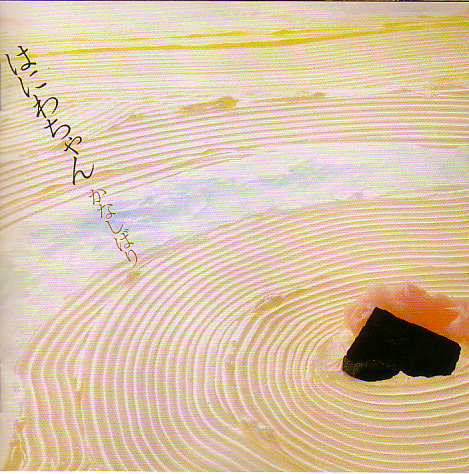
はにわちゃん - かなしばり


1984; 13 tracks


はにわちゃん, or Haniwa-Chan, is one of the many side projects of Japanese Percussionist/Musician Kiyohiko Senba. This vintage Japanese experimental album, Kanashibari (かなしばり), is a fusion of every sound you've ever heard in every world. It is not what it seems.

Download.

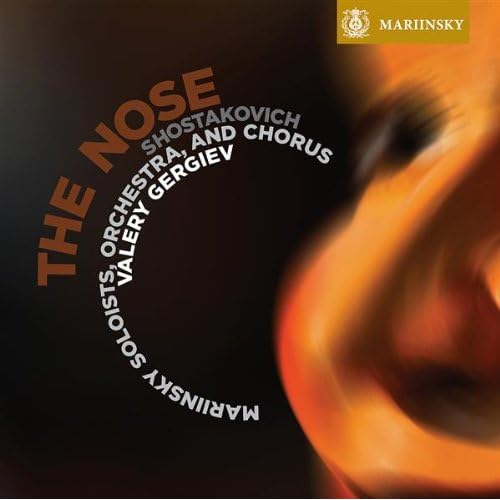
Dmitri Shostakovich - The Nose


2009; 16 tracks, 2 discs
Valery Gergiev / Mariinsky Soloists, Orchestra, and Chorus


This satirical opera shows a young (22, in fact) Shostakovich at, perhaps, his most unhinged. The Nose was completed in 1928 and premiered in 1930. The opera is set in St. Petersburg. Based on a short story by Nikolai Gogol, its absurd plot revolves around the exploits of a pompous government official and his nose. After a visit to the barber, the nose absconds from the man's face and takes on a life of its own; the pretentious bureaucrat is reduced to desperation, frantically searching the city for his lost appendage. Although primarily a comic opera, The Nose touches on the struggle between the individual and society (here portrayed by a cast of over 80 characters), and is one of the most remarkable pieces Shostakovich ever wrote (at least to me).

Shostakovich began work on The Nose soon after the stupendous success of his First Symphony, which was written as his graduation piece at the Leningrad Conservatory and first heard in May 1926, before the composer turned 20 years old. His First Symphony, as we all know, is certainly one of the greatest looks into the composer's core personality, but The Nose broadens this perspective even further. The opera is full of alarming and incongruous but entirely convincing musical turns; virtually the only predictable thing about it is its lack of predictability. Shostakovich was undoubtedly drawn to Gogol's story for its satirical aspects, as many of Shostakovich's pieces could easily be viewed as satirial, mocking, and even subliminally rebellious.

This modern opera masterpiece is highly intense and passionate, a great listen for any fans of the more chaotic realms of music.

Part 1
Part 2

Alfred Schnittke - The Ten Symphonies


2009; 47 tracks
6 discs


There is so much to say about these mindblowing and hardly well known pieces by the Soviet composer Alfred Schnittke and frankly I am not the one to say any of it. If you want to learn more about each one, I've found a few nice reviews while looking at individual recordings.

Disc 1:
Symphony No. 1; 4 tracks
Leif Segerstam / Royal Stockholm Philharmonic Orchestra

Disc 2:
Symphony No. 2, St. Florian; 8 tracks
Anders Aby / Mikaeli Chamber Choir
Leif Segerstam / Royal Stockholm Philharmonic Orchestra


Disc 3:
Symphony No. 3; 4 tracks
Eri Klas / Royal Stockholm Philharmonic Orchestra
Symphony No. 7; 3 tracks
Tadaaki Otaka / BBC National Orchestra of Wales

Disc 4:
Symphony No. 4; 7 tracks
Stefan Parkman / Academy Chamber Choir of Uppsala
Okka Kamu / Stockholm Sinfonietta

Symphony No. 5 (Concerto Grosso No. 4); 4 tracks
Neeme Järvi / Gothenburg Symphony Orchestra

Disc 5:
Symphony No. 6; 4 tracks
Tadaaki Otaka / BBC National Orchestra of Wales
Symphony No. 8; 5 tracks
Lü Jia / Norrköping Symphony Orchestra

Disc 6:
Symphony No. 0; 4 tracks
Symphony No. 9; 3 tracks
Owain Arwel Hughes / Cape Philharmonic Orchestra

Btw: The 9th Symphony, the composer's last work, is one of the most powerful and moving pieces of music I've heard in a long time. Schnittke’s ultimate symphony – actually his very last work – is a “Ninth” in a most unusual sense: Put down with a shaky left hand by an artist who had survived four strokes and was laterally debilitated, it is an impressive triumph of spiritual energy over physical constraints.


Disc 1
Disc 2
Disc 3
Disc 4
Disc 5
Disc 6